Contents
Contemporary Artist Kim Hongrok
Kim Hongrok is a Korean contemporary artist whose practice began with painting and has expanded into performance, photography, video, and installation.
Born in 1985, he graduated from Whimoon High School before enrolling in the Department of Painting at Hongik University’s College of Fine Arts in 2005, where he majored in painting.
While at university, he established a private studio and continued working both within and beyond the school. Exchanges with photographers, video producers, models, actors, and people working in other fields introduced him to different methods and perspectives. Through these encounters, he became interested in how the same event can be interpreted differently according to the observer’s position and experience.
Between Fact and Perception
After completing his military service and returning to university, Kim Hongrok began his artistic career in 2008, while still a student, with works sharing the title A Clue to the Recovery of Authenticity. Rather than foregrounding his own emotions or conclusions, he presented the circumstances surrounding people, events, and actions, leaving viewers room to think for themselves.
Here, ‘objective expression’ does not mean removing the artist’s perspective or the values embodied in the work. His judgment shapes both the choice of subject and the construction of each situation. The objectivity Kim Hongrok pursued was an approach that reduced emotional staging and direct explanation, allowing viewers to encounter the subject and its circumstances first.
A Clue to the Recovery of Authenticity: Brushing Teeth
Begun in 2008, A Clue to the Recovery of Authenticity: Brushing Teeth is a body of performance and photographic work that places an everyday action, repeated by many people, among different individuals and in different settings.
Brushing teeth is usually an act of hygiene performed in private. Kim Hongrok moved it in front of an artwork, into a studio during a nude drawing class, and into a cinema. Yet the work does more than present a familiar action in unfamiliar places. Within each scene, brushing teeth invites a fresh look at the relationships between artist and artwork, student and creative agent, and art and industry.
A Clue to the Recovery of Authenticity: Jongsik Choi
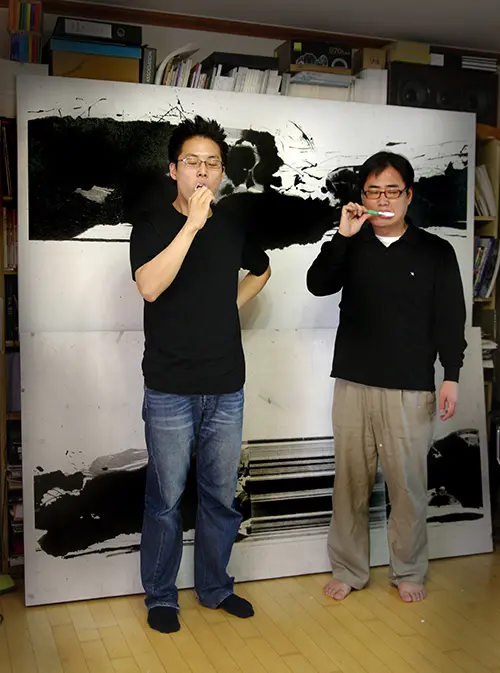
A Clue to the Recovery of Authenticity: Jongsik Choi / Lambda print, 2008 / Kim Hongrok
Two people brush their teeth in front of an artwork by Jongsik Choi. Rather than depicting the act of viewing art, the photograph places Choi’s everyday action in front of his own work within the same frame as that work. It invites viewers to reconsider the relationship between an artwork and the person who made it.
A Clue to the Recovery of Authenticity: Nude Drawing Class
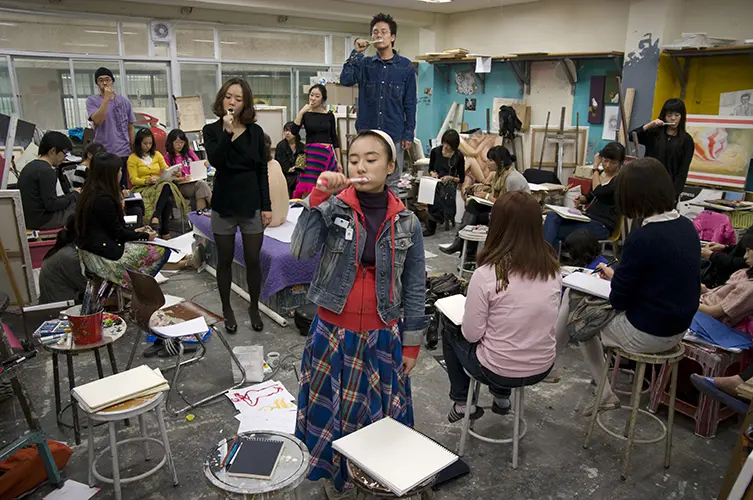
A Clue to the Recovery of Authenticity: Nude Drawing Class / Lambda print, 2008 / Kim Hongrok
This performance took place during a nude drawing class. In a class devoted to observing and drawing the human body, Kim Hongrok chose to brush his teeth and transformed the action into a work of art.
The roles of student and artist overlap in a single scene, revealing a creative agent who conceives and carries out work according to his own judgment, even within an educational setting. The work does not confine the student to the status of an aspiring artist: it presents him as someone already creating and performing his own work as an artist.
A Clue to the Recovery of Authenticity: Megabox
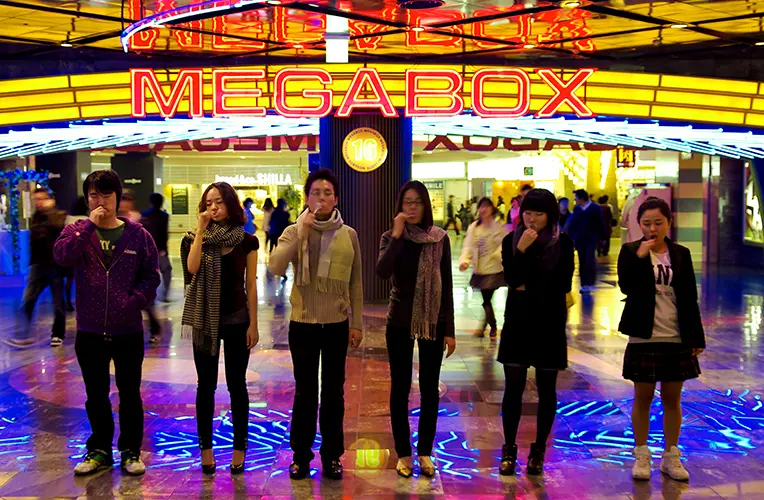
A Clue to the Recovery of Authenticity: Megabox / Lambda print, 2008 / Kim Hongrok
Several people stand together and brush their teeth at COEX Megabox. Alongside those who had gathered for the shoot, passersby were invited to participate. Some joined spontaneously, brushing their teeth together for the photograph.
Film reaches its audience through an industrial system of production, distribution, and exhibition. Visual art likewise engages with society through structures of creation, exhibition, circulation, and trade.
The work brings a shared condition of film and visual art into one frame: both are forms of artistic expression that exist within commercial structures. It prompts reflection on an attitude that readily accepts film as an industry while treating visual art as a pure realm apart from the market.
Across the three works, brushing teeth both moves an everyday action into unfamiliar settings and questions the boundaries between artist and artwork, student and creative agent, and art and industry.
A Clue to the Recovery of Authenticity: Seok-cheon Hong
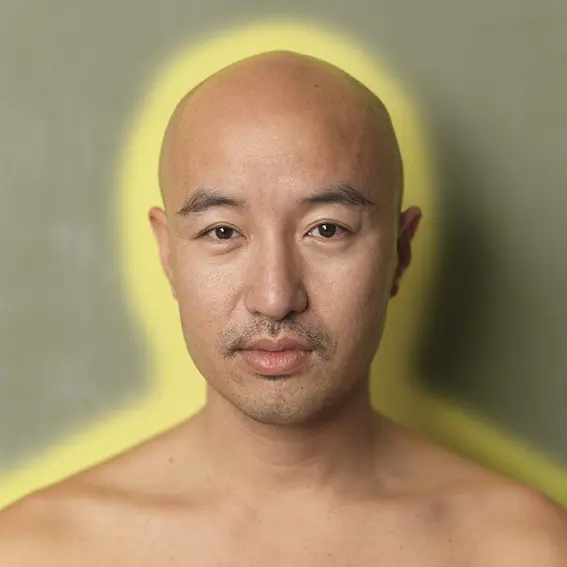
A Clue to the Recovery of Authenticity: Seok-cheon Hong
A Clue to the Recovery of Authenticity: Seok-cheon Hong / Lambda print, 120 × 120 cm, 2011 / Kim Hongrok
After Seok-cheon Hong came out publicly in 2000, his appearances on a succession of television programmes came to an end. Over time, social and media attitudes changed, and he returned to broadcasting and resumed an active career. Kim Hongrok created this work with Hong in 2011.
Rather than judging changes in Hong himself, the work invites viewers to consider how society and the media changed their view of him. It does not define his identity through a single explanation; instead, it takes the changing perceptions around him as its subject.
Expanding Beyond Painting
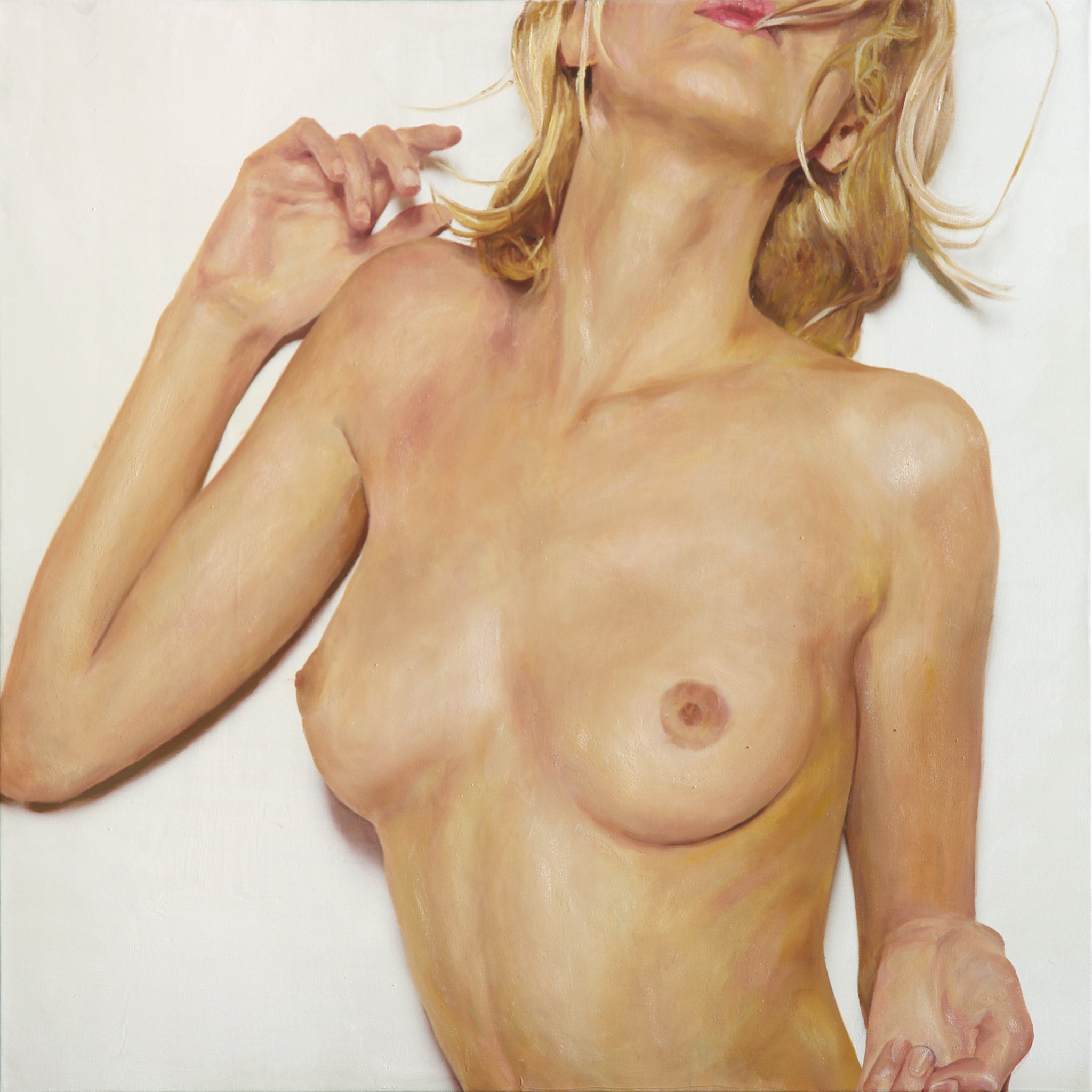
Oil on canvas, 120 × 120 cm, 2010 / Kim Hongrok
Kim Hongrok continued to paint as he expanded into photography, performance, and installation. He has not abandoned painting in favour of other media, but has chosen a medium according to the subject and approach of each work.
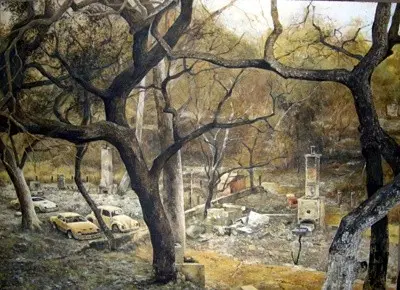
Egg tempera on a wooden board, 2004 / Work from the portfolio submitted for admission to Hongik University / Kim Hongrok
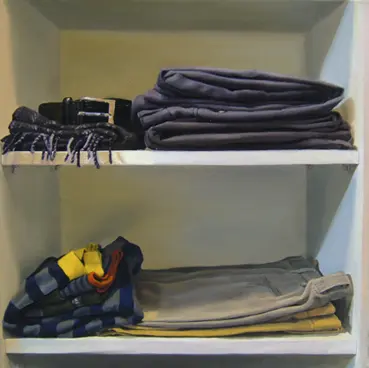
Self-portrait / Oil on canvas, 2007 / Kim Hongrok
The 2004 egg tempera work, the 2007 self-portrait, and the 2010 oil painting show that Kim Hongrok’s practice began with painting. The photography, performance, video, and installation that followed can be understood as an expansion of his expressive methods rather than a break with painting.
First Solo Exhibition
A Clue to the Recovery of Authenticity: Bussot, Raul
A Clue to the Recovery of Authenticity: Bussot, Raul / Installation, performance, video, photography, and text / Five-day performance, gallery open 24 hours a day / 2013 / Kim Hongrok
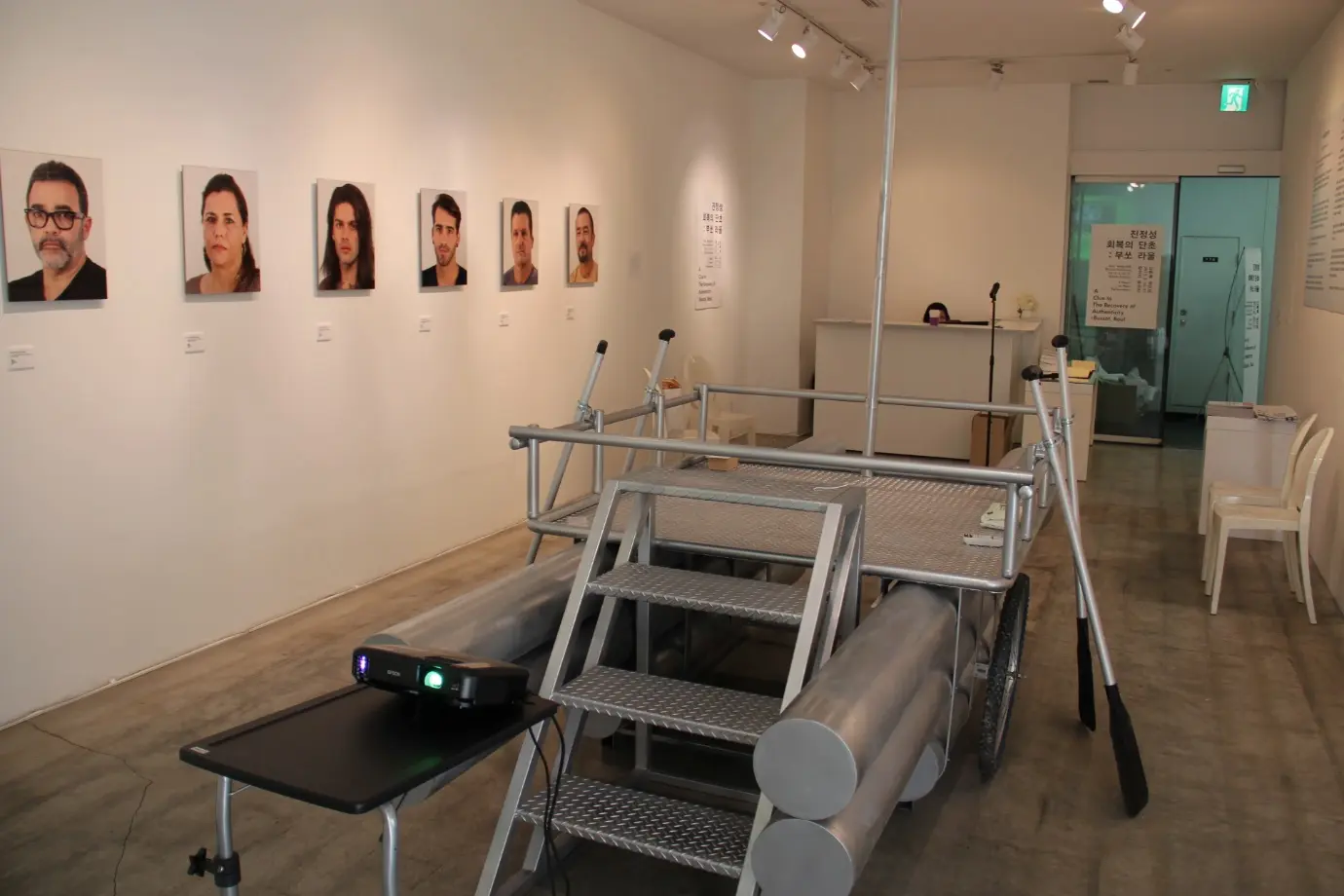
A Clue to the Recovery of Authenticity: Bussot, Raul was Kim Hongrok’s first solo exhibition. It explored the experience of the Bussot family, who left Cuba on a raft bound for the United States in 1993. The exhibition opened on 25 March 2013, twenty years after the voyage began, and ran until 31 March.
The two children who travelled with the family were four and five years old; Raul Bussot Jr. was five. According to the family’s recollections, Raul Bussot and his companions prepared a raft in a mangrove forest, avoiding surveillance by the Cuban Coast Guard, before setting out to sea at night.
Raul Bussot Jr. remembered leaning against others for warmth in the cold sea and hoping that, in the United States, he could watch cartoons on television without power outages. A storm drove the family off course, leaving them adrift for five days. They were first spotted by a fishing boat and subsequently rescued by the United States Coast Guard.
Kim Hongrok met Raul Bussot Jr. and interviewed him about his family’s experience. In 2013, twenty years after the voyage, he built a raft of the same size and form as the original, using iron, aluminium, bicycle wheels, and oars, and installed it in the gallery.
Kim Hongrok and the now-adult Raul Bussot Jr. ate, slept, and lived on the raft for five days. They prepared Spam, chocolate, and water, drawing on the provisions the family had taken on the original voyage. The gallery remained open 24 hours a day throughout the performance.
Viewers did more than observe a finished work from a distance. They approached the space where Kim Hongrok and Raul Bussot Jr. were living, listened to their story, and spoke with them. These encounters also became part of the performance.

Footage recorded by the United States Coast Guard / Florida, USA / 6 minutes 50 seconds / 1993
Footage of the 1993 voyage and rescue was also screened in the gallery. With the historical record and the performance twenty years later presented in the same space, viewers could consider the relationships between lived experience, memory, and re-enactment.
The exhibition placed the divide between the liberal United States and socialist Cuba alongside the relationship between South Korea and North Korea. Within one work, it compared differences between political systems across distinct times and places.
In a South Korean gallery in 2013, exactly twenty years later, the artist revisited the Bussot family’s 1993 departure from socialist Cuba for the liberal United States. As the relationship between the United States and Cuba is reconsidered through that between South Korea and North Korea, the values and symbols of two different times and places intersect.
The Bussot family’s voyage can be read as more than an account of migration in one region. It was a family’s choice about the direction of their lives between different political systems. Their experience shows contemporary viewers the value and importance of liberalism in people’s lives, through its protection of individual choice and freedom of movement.
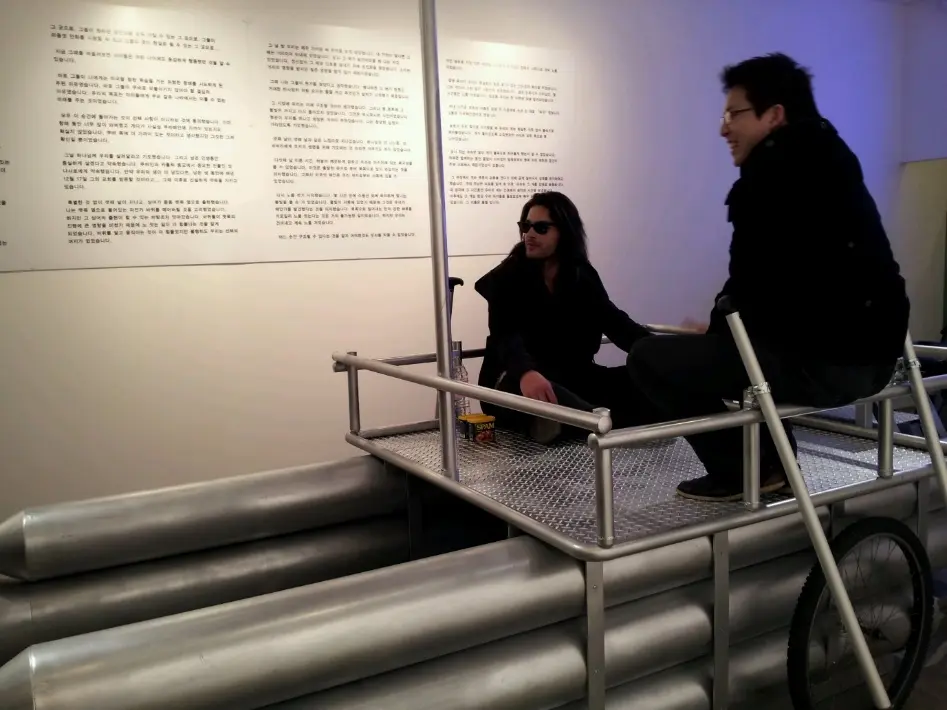
Raul Bussot Jr. and Kim Hongrok seated on the raft during the performance. The text documenting the Bussot family’s voyage is installed behind them.
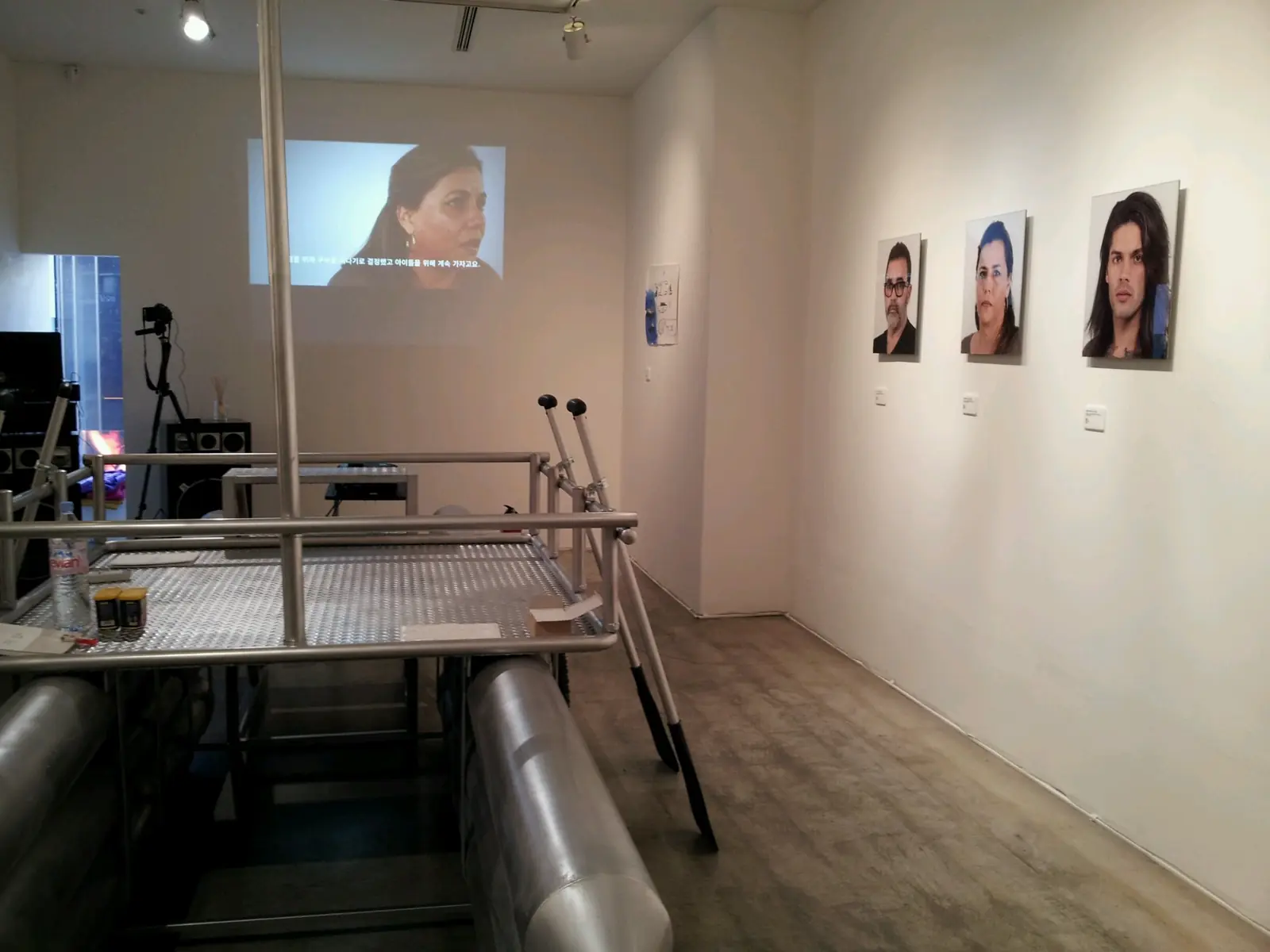
Installation view bringing together the raft, portrait photographs, and the interview video
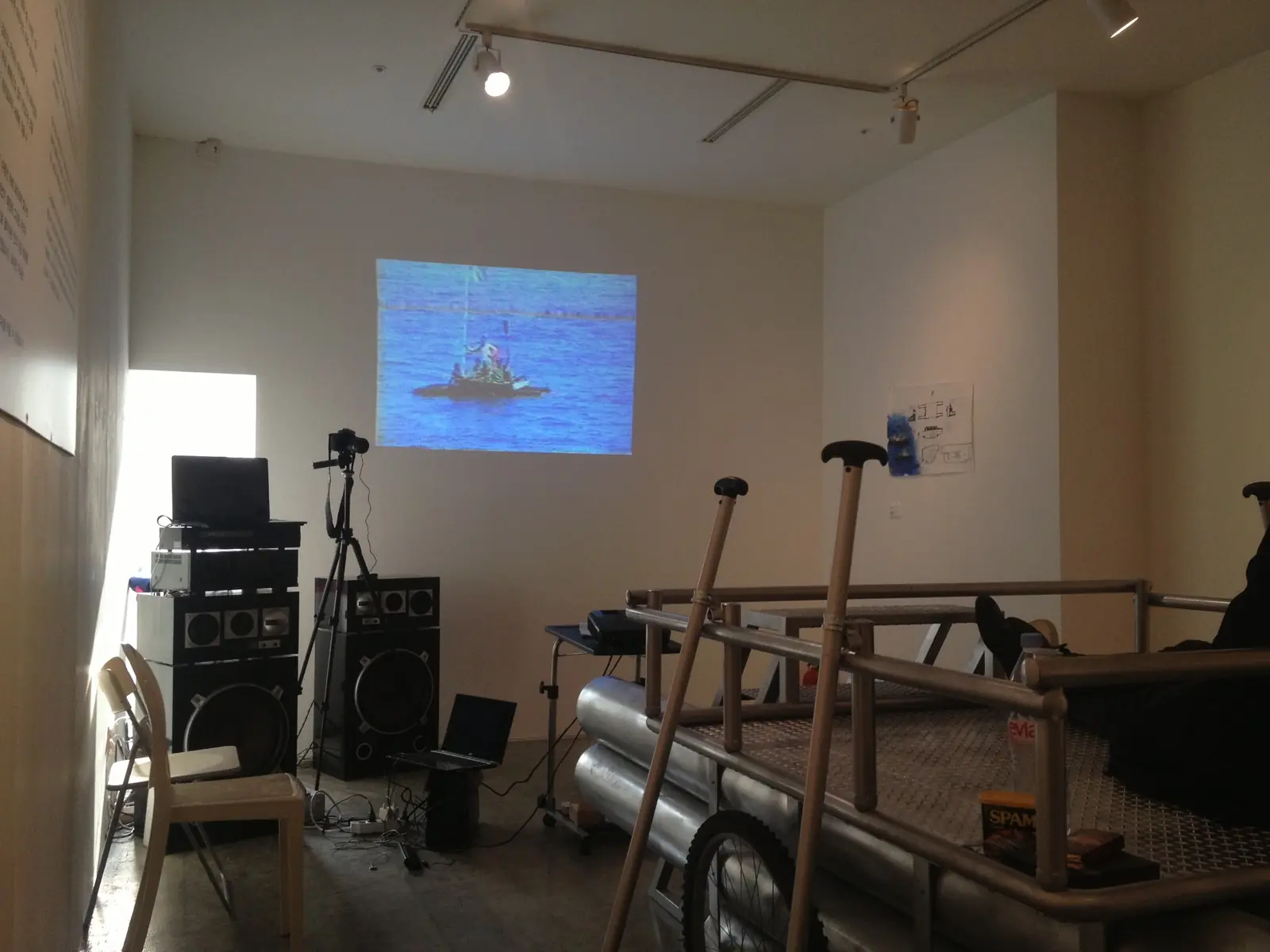
Installation view with footage of the 1993 voyage and rescue facing the raft
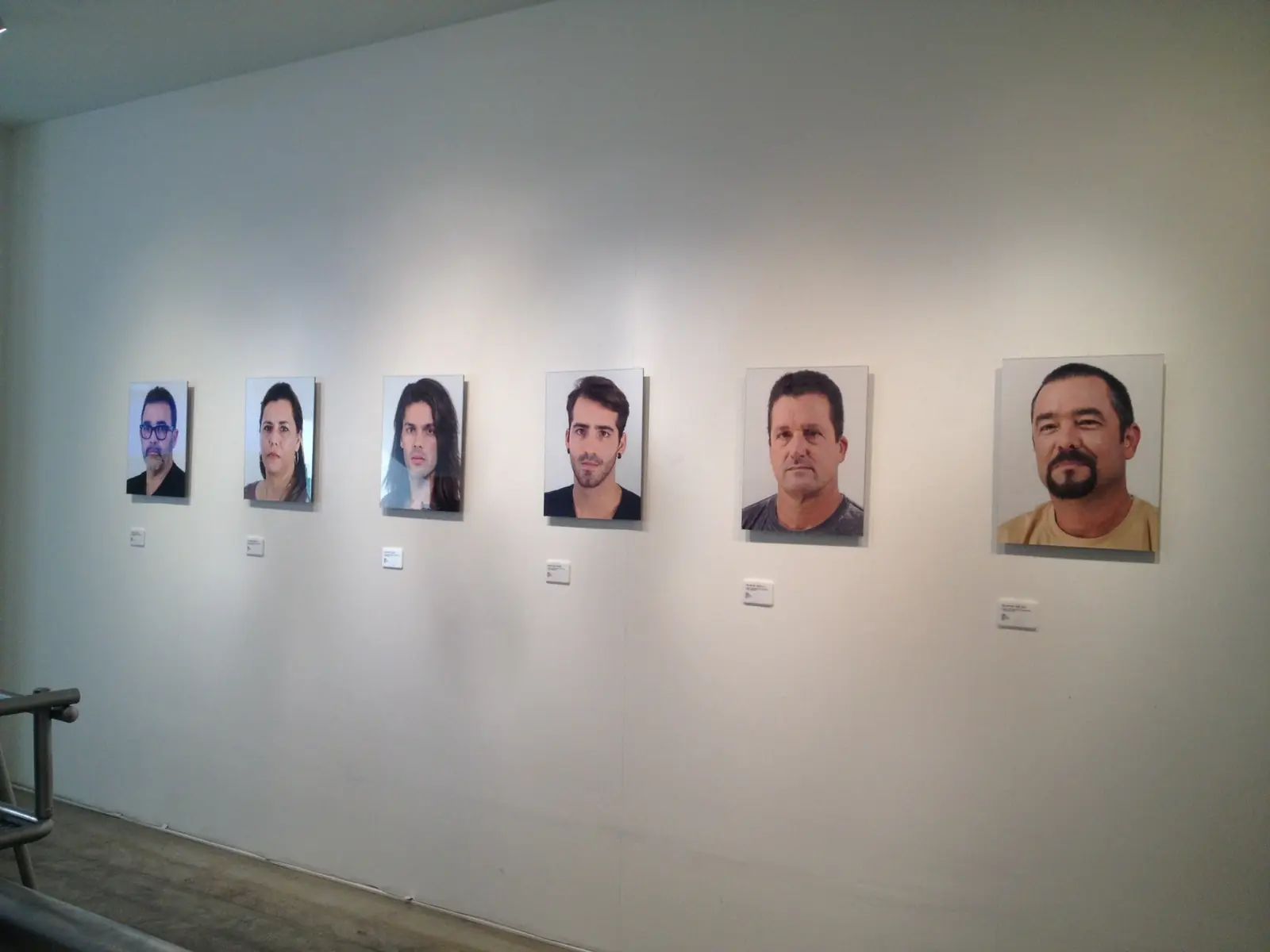
Exhibition wall displaying portraits of the Bussot family and their companions on the voyage
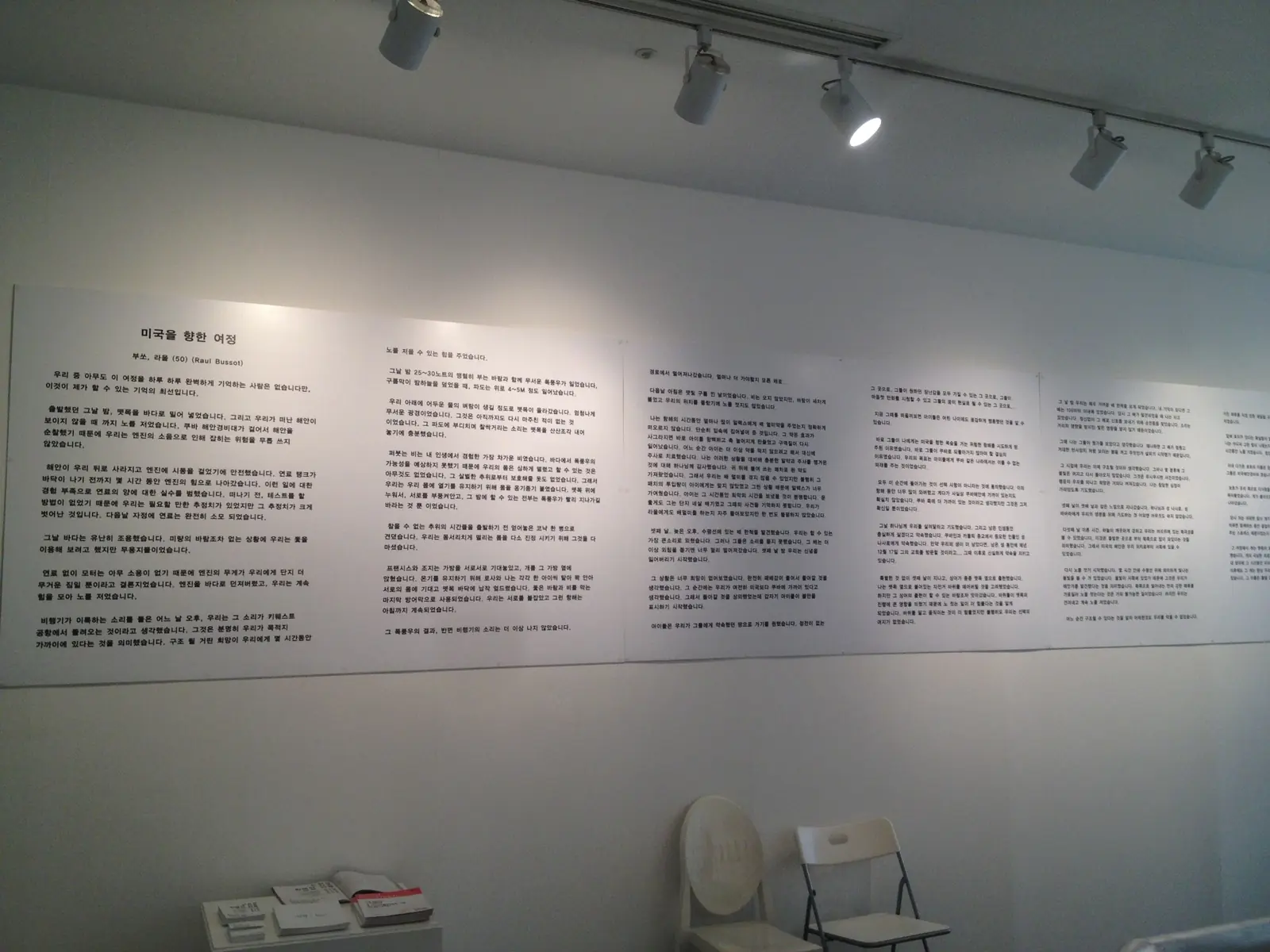
Exhibition wall displaying the written account of the Bussot family’s voyage
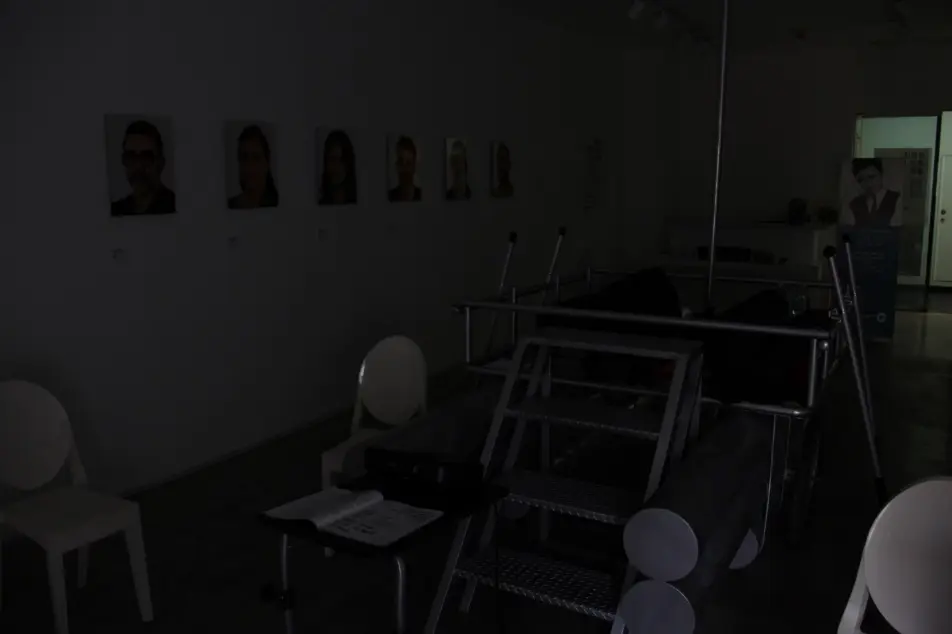
The performance was not an attempt to reproduce the experience of twenty years earlier exactly. Through the constraints of space, time, and food, it sought to approach a family’s memories and share with contemporary viewers the meaning of their choice to pursue freedom.
According to the Bussot family’s recollections, the first food they ate after arriving in the United States in 1993 was from McDonald’s. Drawing on this memory, Kim Hongrok and Raul Bussot Jr. ate McDonald’s food on the raft on the final day of the 2013 performance. This experience led to Kim Hongrok’s second solo exhibition, A Clue to the Recovery of Authenticity: McDonald’s, held later that year.
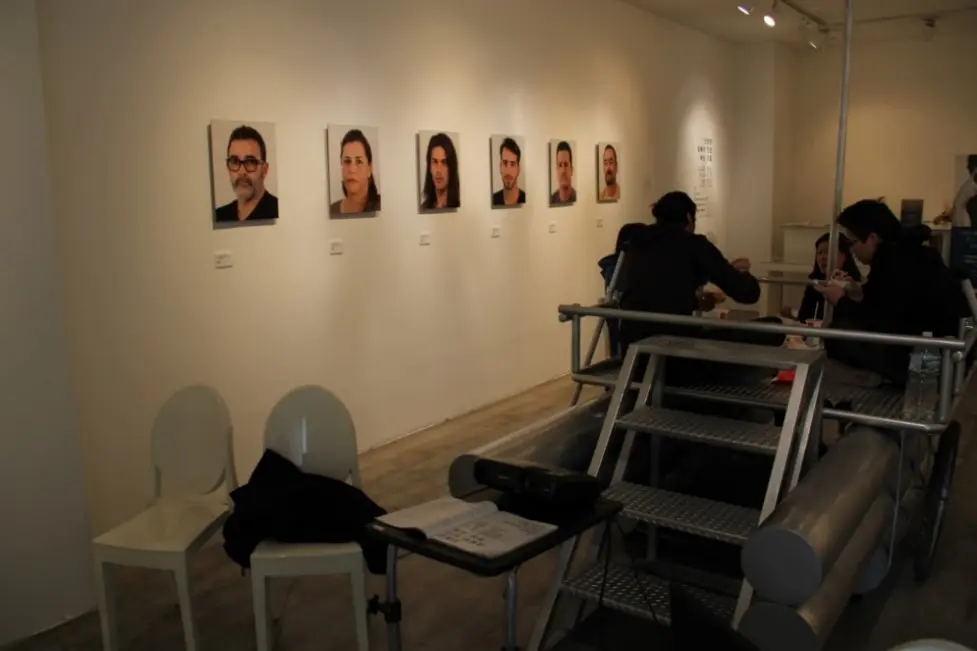
Kim Hongrok and Raul Bussot Jr. eating McDonald’s food on the raft on the final day of the performance, 30 March 2013
Second Solo Exhibition
A Clue to the Recovery of Authenticity: McDonald’s
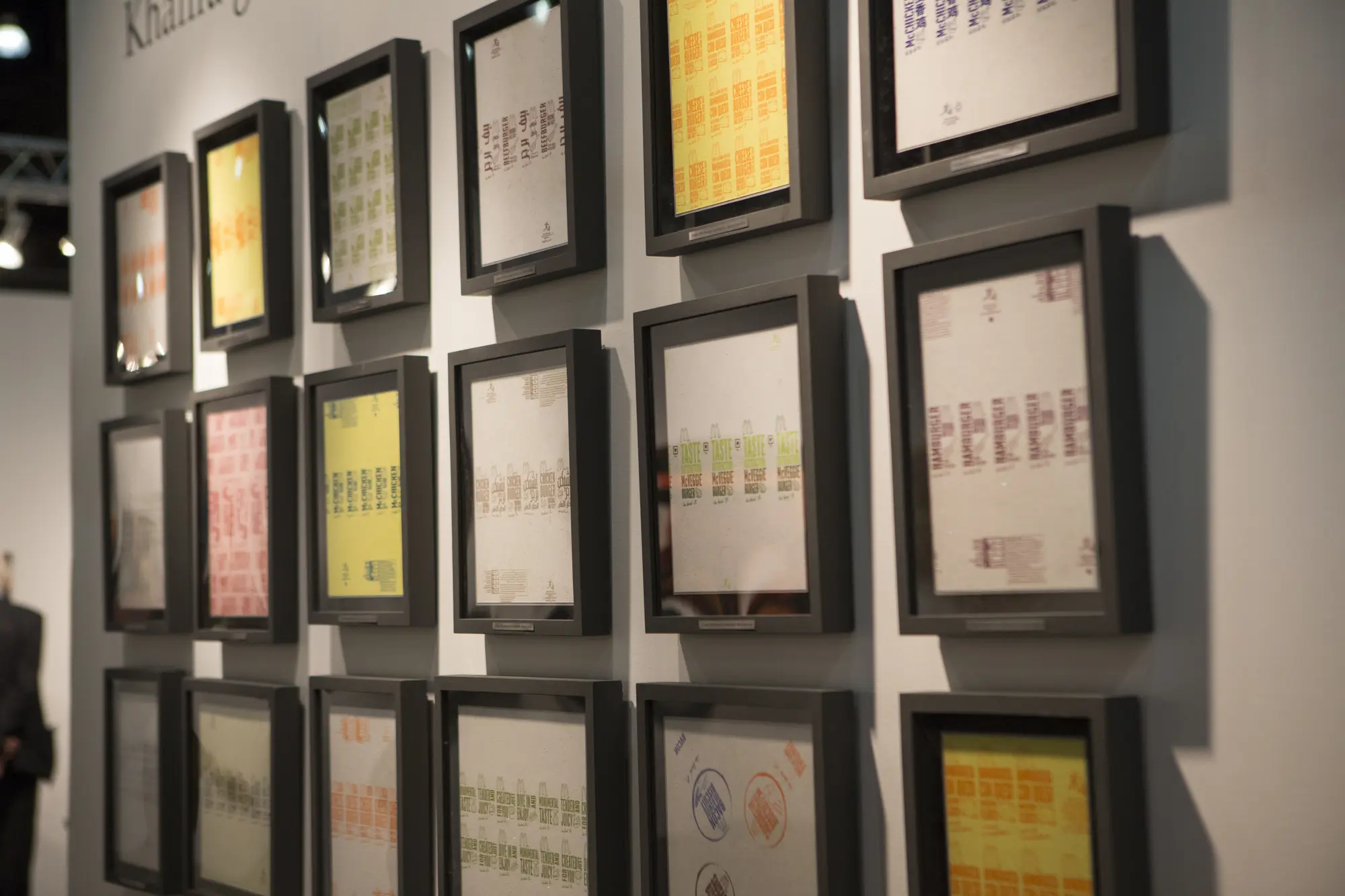
A Clue to the Recovery of Authenticity: McDonald’s / Diamond dust on hamburger wrapping paper, 2013 / Kim Hongrok
A Clue to the Recovery of Authenticity: McDonald’s was Kim Hongrok’s second solo exhibition, held in 2013. He applied diamond dust to McDonald’s hamburger wrappers collected in different cities.
The Bussot family remember McDonald’s as the first food they ate after arriving in the United States. In the work, it represents a specific memory of their first experience of liberalism and capitalist society. Other viewers may see an everyday meal or a familiar global brand. The same object can thus carry different meanings and values according to personal experience, place, and time.
Kim Hongrok applied diamond dust, which commands a high price and exchange value in capitalist markets, to mass-produced wrappers discarded after use. The diamond dust used in the work is not powder, but very small natural diamonds with multiple facets that reflect light.
A discarded consumer item and a gemstone meet on a single surface. A trace of everyday consumption, marking one family’s first encounter with capitalism, is connected to an object in which market value is highly concentrated. Without naming capitalism directly in words or slogans, the relationship between these materials condenses and reveals the wide range of values formed within it.
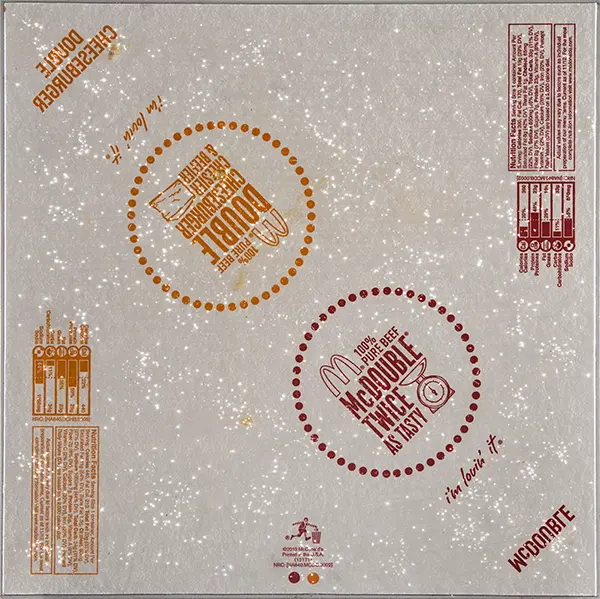
A Clue to the Recovery of Authenticity: Chicago, America / Diamond dust on hamburger wrapping paper, 2013 / Kim Hongrok
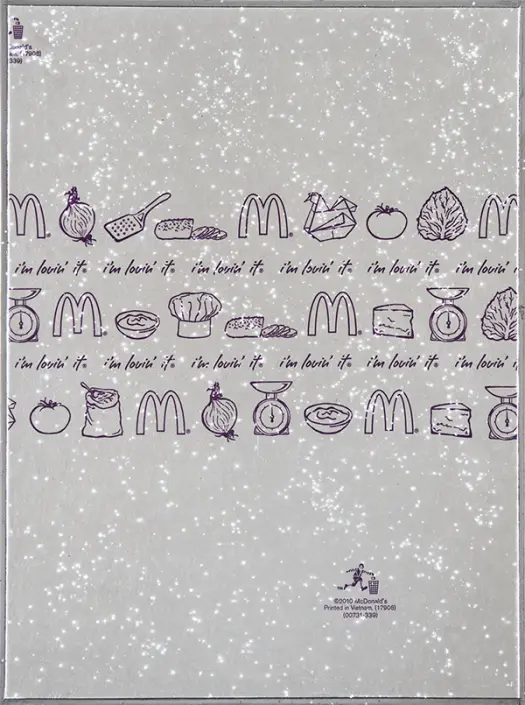
A Clue to the Recovery of Authenticity: Ho Chi Minh, Vietnam / Diamond dust on hamburger wrapping paper, 2013 / Kim Hongrok
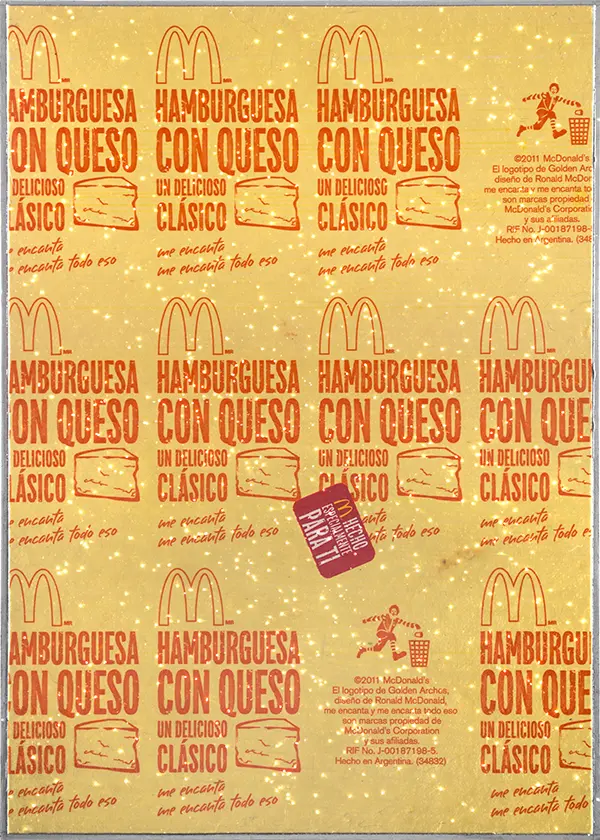
A Clue to the Recovery of Authenticity: Buenos Aires, Argentina / Diamond dust on hamburger wrapping paper, 2013 / Kim Hongrok
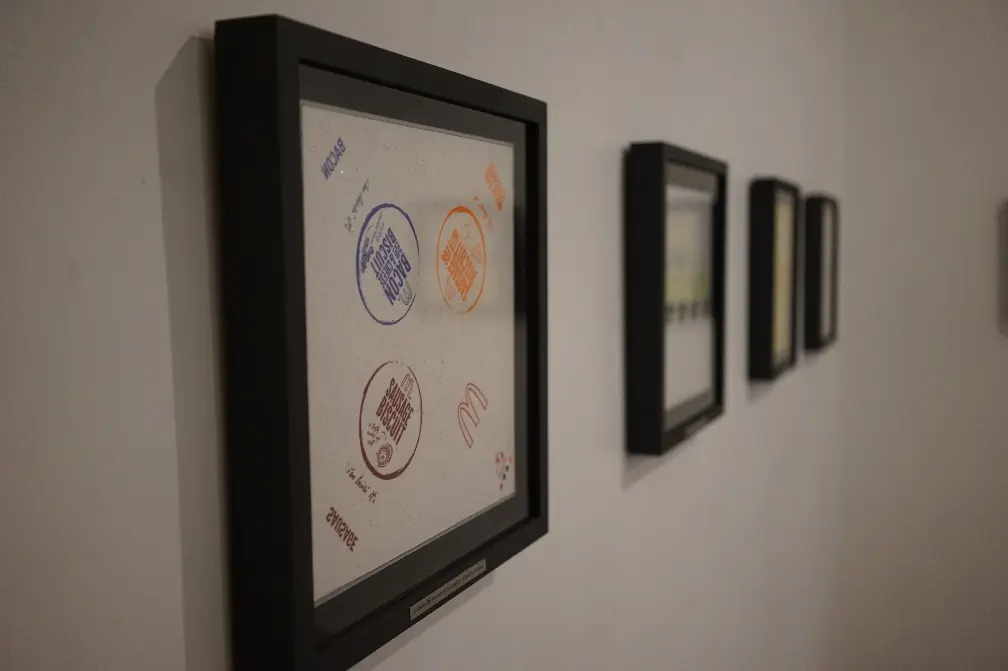
According to the exhibition materials from the time, Kim Hongrok collected McDonald’s wrappers from 20 countries with the help of many people. Each work was named after the city and country where its wrapper was collected. The series brings together traces of a single global brand produced, distributed, and consumed in different regions.
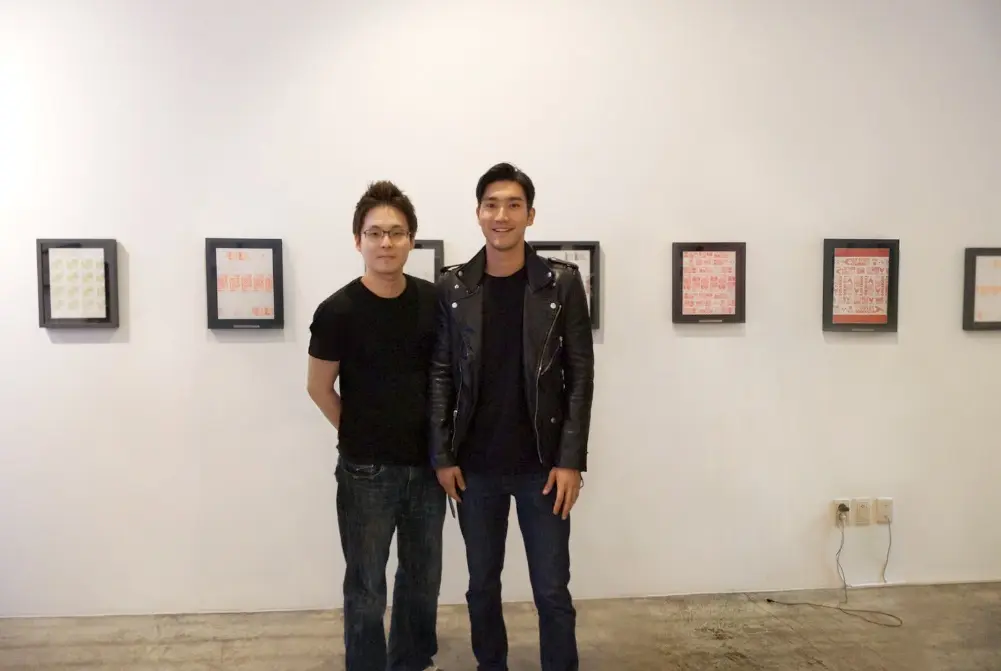
According to the artist’s records, he sought help with collecting the wrappers from Korean embassies in several countries and other organisations. Choi Siwon shared news of the collection with his overseas fans, and people living abroad also helped gather materials.
The artist recorded receiving replies from some regions stating that they had no McDonald’s restaurants. The series thus also includes the fact that McDonald’s presence varied from one region to another at the time.
In this series, McDonald’s is both the first food the Bussot family ate in the United States and an object through which they experienced capitalism directly, in everyday consumption and global production and distribution. By placing a consumer item discarded after use alongside a gemstone traded at a high price, the work shows how different forms of value are created and exchanged within capitalism.
A wrapper destined for disposal gains new value as it meets diamond dust and becomes an artwork. This process connects with the workings of capitalism, in which production, distribution, exchange, and creation generate and expand value. Through the capitalism the Bussot family experienced after arriving in the United States, the work revisits the possibilities of individual choice, opportunity, and value creation.
Some works from the series were also exhibited at the 2014 LA Art Show at the Los Angeles Convention Center.
Third Solo Exhibition
A Clue to the Recovery of Authenticity: Military Sex Slave
A Clue to the Recovery of Authenticity: Military Sex Slave / Video and installation, 2015 / Kim Hongrok
A Clue to the Recovery of Authenticity: Military Sex Slave was Kim Hongrok’s third solo exhibition, held from 23 July to 23 August 2015.
Rather than the commonly used expression ‘Japanese military comfort women’, the artist chose the words ‘military’, ‘sex’, and ‘slave’ for the exhibition title. He sought to express more directly the nature of the war and institutional sexual violence addressed by the exhibition.
Through video, photography, and installation, the exhibition recorded five survivors of Japanese military sexual slavery who were alive when the work was made in 2015: Ok-seon Park, Ok-seon Lee, Soon-ok Kim, Kun-ja Kim, and Il-chool Kang.
The three solo exhibitions formed a continuing exploration of how different systems and histories affect individual lives. Through one family’s choices and movement, the first addressed the value and importance of liberalism. Through the combination of different objects, the second examined the values formed within capitalism and their meaning. The third recorded the effects of imperialism on individual lives through the faces and gazes of five women.
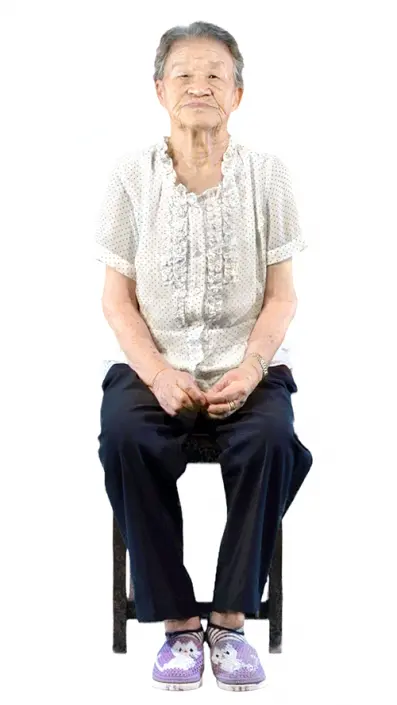
A Clue to the Recovery of Authenticity: Ok-seon Park
Photography, 2015 / Kim Hongrok
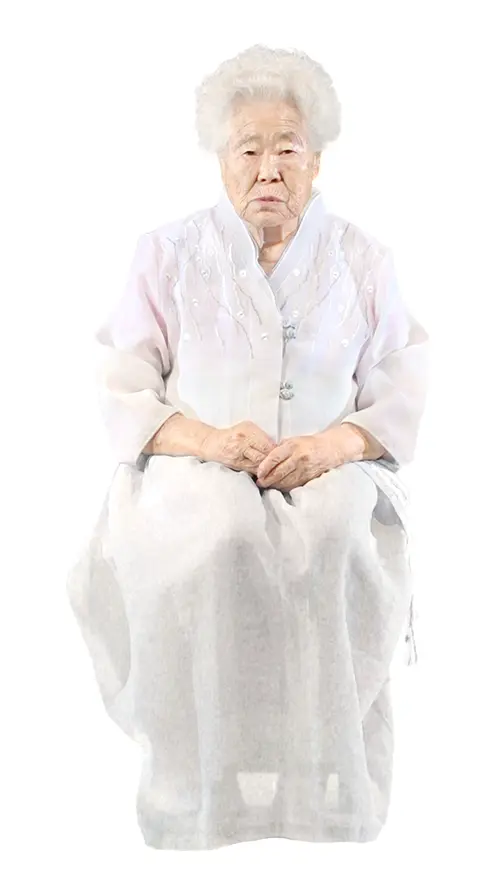
A Clue to the Recovery of Authenticity: Ok-seon Lee
Photography, 2015 / Kim Hongrok
The installation projected videos of the five women onto a white cotton screen measuring 3 × 2 m.
In the videos, the five women neither re-enact their experiences of abuse nor speak scripted lines. With gestures that emphasise emotion kept to a minimum, they sit on a chair and look towards the camera. Viewers meet their gaze at eye level in projections close to life size.
According to the artist’s working records, some of the five women asked during filming whether the images were for a news report or a memorial portrait. After learning that the filming was for an artwork, some arranged their hair or changed their clothes before sitting in front of the camera.
This arrangement was part of an approach that sought to record the women as individuals named Ok-seon Park, Ok-seon Lee, Soon-ok Kim, Kun-ja Kim, and Il-chool Kang, rather than confining them to a single emotion or an idea of how a ‘victim’ should appear.
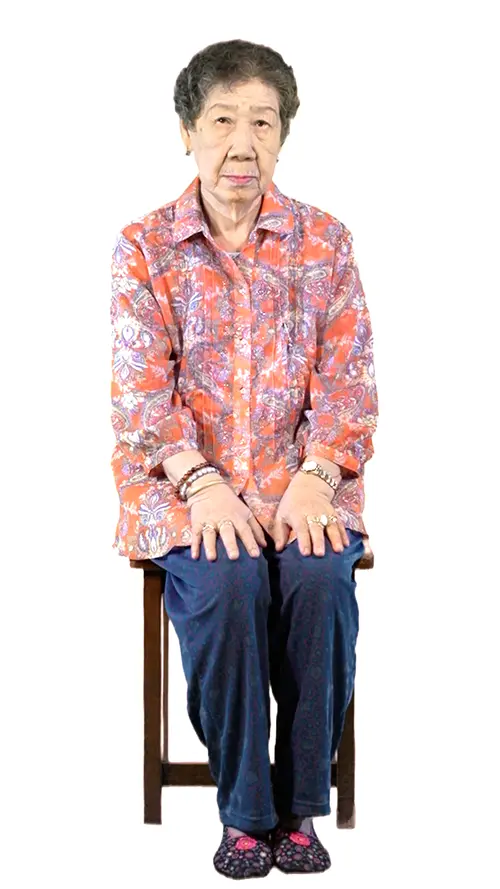
A Clue to the Recovery of Authenticity: Il-chool Kang
Photography, 2015 / Kim Hongrok
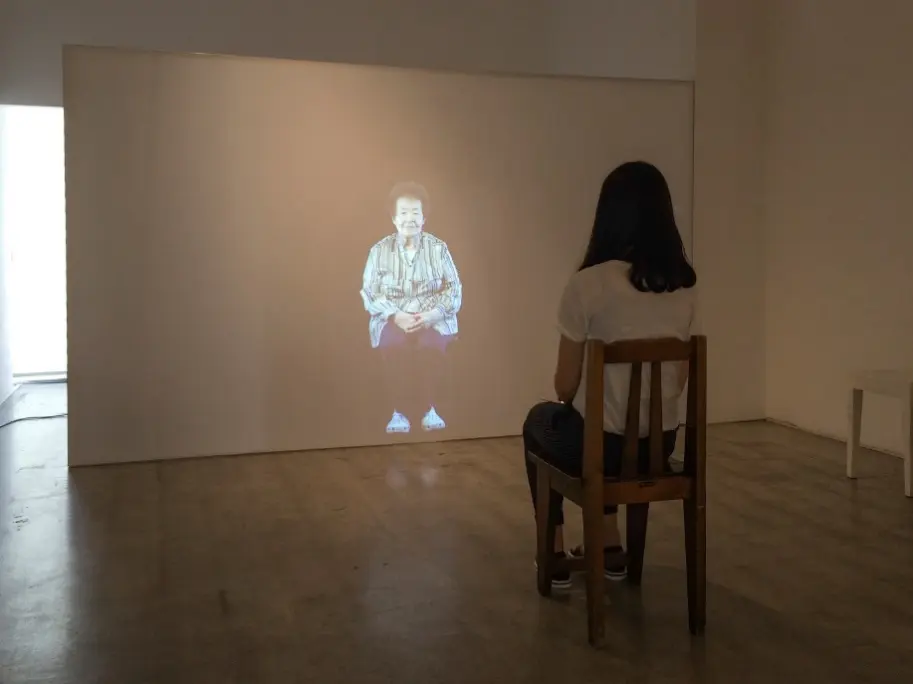
A viewer meeting the gaze of the late Kun-ja Kim in the video
The chair on which the five women sat during filming was also placed in the gallery. Facing the chair seen in the videos, the physical chair connected the time of filming with the time of the exhibition.
Viewers could sit on the chair and meet the women’s gaze at eye level in the videos. The chair connected the five participants with contemporary viewers, allowing them to face one another.
Kun-ja Kim was born in Pyeongchang, Gangwon Province, in 1926. In 1942, she was taken to a Japanese military ‘comfort station’ in Hunchun, Jilin Province, China. She endured sexual slavery there for approximately three years until liberation, after which she returned to Korea.
In 2007, she testified about her experiences at a hearing held under the United States House Committee on Foreign Affairs. In 2000 and 2006, she donated 50 million won each time, a total of 100 million won, to The Beautiful Foundation, providing the initial funding for the ‘Grandmother Kim Kun-ja Fund’. With further public donations, the fund had supported the tuition of approximately 250 university students who had left child-protection facilities by July 2017.
For her testimony and charitable work, Kun-ja Kim received the Camellia Medal of the Order of Civil Merit in 2014. The work made in 2015 also records her wearing the medal.
Kun-ja Kim died on 23 July 2017.
After the work was made, Soon-ok Kim died on 5 December 2018, Ok-seon Park on 7 September 2024, and Il-chool Kang on 28 March 2026.
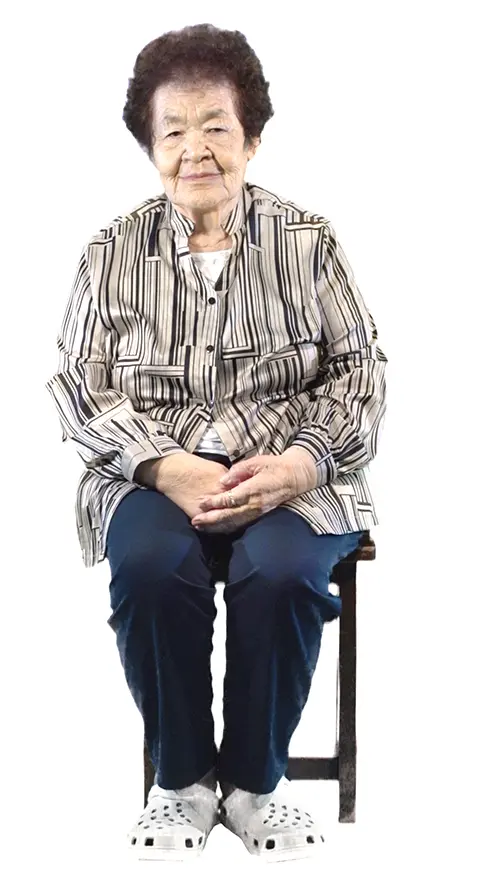
A Clue to the Recovery of Authenticity: Kun-ja Kim
Photography, 2015 / Kim Hongrok
The work does not reduce the history of Japanese military sexual slavery to a single explanation or emotion. By placing the names, faces, and gazes of the five women before contemporary viewers, it invites reflection on the effects of imperialism and war on individual lives.
The videos and the chair used during filming allow contemporary viewers who cannot meet the five women in person to encounter their images at the same eye level.
Authenticity, Clue, Recovery
In the title, ‘authenticity’ refers to the reasons the work began and its underlying essence, beyond the images on its surface and familiar judgments about the subjects and events it addresses. Rather than fixing interpretation into a single conclusion, it leaves room to approach that source through different perspectives and circumstances.
Instead of prescribing an interpretation, Kim Hongrok’s work focuses on presenting specific people, objects, and events that allow viewers to think for themselves. This does not make its perspective or values unclear. He selects subjects he considers important and constructs situations in which viewers can examine their meaning for themselves.
The ‘clue’ in the title is a thread from which thought can begin, rather than a conclusion. Specific subjects fulfil this role: an everyday action, a person’s face, a family’s memory, or a wrapper discarded after use.
‘Recovery’ refers less to a complete return to a previous state than to the process of reconsidering familiar events, objects, and people in an effort to approach their essence.
A Clue to the Recovery of Authenticity began with the everyday act of brushing teeth. The series went on to explore social perceptions of an individual, a family’s choices and movement, the value of liberalism, the values formed within capitalism, and the faces of victims of war.
Through these different works, Kim Hongrok invites viewers to reconsider subjects they thought they already knew and to reflect on what freedom and choice, value and human dignity mean in individual lives.